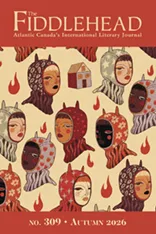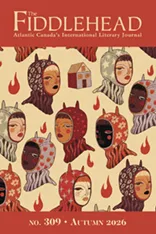
Excerpt from Issue 309 (Autumn 2026)
"Clawed Back" by Patti-Kay Hamilton
Winner of the 2026 Creative Nonfiction Prize
The claw sticks up through the purple blooms. Sharp, black talons thrust out, stretched toward the sky. I peek beneath the flowers and find a raven curled around the base of the stems. Black feathers on black dirt, so it isn’t visible at first glance. The petunias cascade back over the body when I jerk my arm back.
From the enclosed garden, I push my sister’s wheelchair into the dementia wing of the care home. In a whisper, I ask the nurse to call the janitor. “Don’t tell them,” I say, nodding toward the table where several white-haired ladies gather. The one with the long braid palms a deck of cards and randomly shuffles a blackened matchstick on a cribbage board. Another rocks a baby doll swaddled in flannel. “Finding a dead raven might alarm them.”
My sister grips my thumb in a tight squeeze as I feed her thickened juice with a teaspoon and pat the drool on her chin with a tissue. I glance out at the small, wooden flower box overflowing with the purple petunias she chose in the spring. I imagine the janitor tossing the carcass into the trash with coffee grounds, orange peels and soiled adult diapers. No ceremony. No respect. Coward. Take care of it yourself. It’s only a lifeless bird.
Ravens piss people off. Their loud squawking as they battle for tasty scraps in yards or knock over garbage cans disturbs sleep. My husband keeps a slingshot and marbles on the back porch to discourage their visits. One frigid day, a bold raven swoops from behind and plucks the muskrat hat from his head during a hike across Axe Handle Hill. From a high perch, it taunts us as we throw sticks until the hat falls onto the snowbank. A local dog musher dangles a dead raven on a noose near his kennel to discourage the ravens’ raids on the piles of fish he feeds his huskies. In the spring, I find all the spuds I’d planted unearthed and scattered across the garden among claw prints that look as if the ravens held a dance in my potato patch.
People raised in the old ways know the large black bird as a cunning rascal and a mythical creature. My son’s favourite bedtime story is about how his great-grandfather got his name. It was in the days when families travelled long distances in search of caribou and camped in skin tents along the tree line. Mothers, grandmothers and children joined the excursions, and there was no time for a fussy newborn. On one of these trips, the mother grows self-conscious when the hunters frown and become impatient with her child’s wailing. She lays her baby on the snow to unbundle his rabbit-skin blanket and check the moss diaper. “What is wrong? Why won’t you stop crying?” From the top of a poplar, a raven gurgles what sounds like, “Caw Ca Gee, Caw Ca Gee.” The baby stares up at the raven, and his crying halts. His mom looks back and forth between the bird and her son. “Ah,” she says. “You want a name.” She calls him Kargeye, and after that, he seldom frets again.
Experienced bird experts claim ravens can mimic human words, much like parrots. When I worked as a flag girl during the construction of an arsenic pit at Yellowknife’s Giant gold mine, a coworker rescued a raven with a broken wing from a busy road. He tossed his jacket around the limping bird, which appeared to have fallen from a nest on top of a power pole. Arms wrapped around the wounded creature, he carried it to safety. The raven thrashed, wriggled and finally thrust his head out from the bindings. The man stared down into the ruby-red throat just before its beak slashed his nose. Despite getting off to a bloody start, the two became companions. A year later, the miner with the scar across his nose invited me to meet his flightless buddy. It perched on his workbench, and the man asked for a screwdriver. The bird tipped its head to the side as if considering the request. Then, it hopped over to carry the tool back in its beak.
— Patti-Kay Hamilton is an award-winning writer who lives in Ft. Smith, NWT, the traditional territory of Métis and Salt River First Nation. The connection of northerners to wilderness inspires Hamilton’s writing, including her book In The Wild: Pi Kennedy a Lifetime Trapper. Currently, she is working on Bushwacking: No Trails in Sight.
You can read the entirety of Patti-Kay Hamilton's "Clawed Back" in Issue 309 Autumn 2026 now!
Order Issue 309 - Autumn 2026 (Canadian Addresses)
Order Issue 309 - Autumn 2026 (International Addresses)