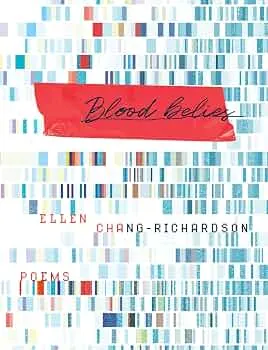
What is our relationship to the land on which we live? What is our relationship to our family? I’ve reflected a lot about these questions in my writing. Many writers have and will continue to explore them, but one book in particular that left me dwelling on how I’ve lived with these questions is Blood Belies (Wolsack and Wynn, 2024) from poet Ellen Chiang-Richardson (who was also my mentor for the 2025 TWUC BIPOC Writers Connect conference).
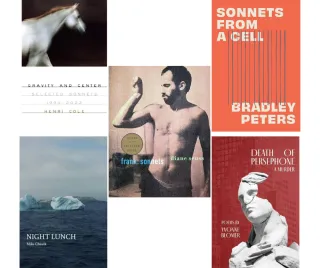
I’ve been reading a lot of contemporary sonnets and am a bit in love with their surprising manifestations, their intricate weaves, their speed and motion.
For most of my life I reveled in the gloom to be found in music. I loved the way melodies and lyricism could make you feel the same way the artist must have felt at the peak of their supposed sorrow. Unfortunately, leaning on everybody else’s melancholy left me miserable and, at the time, I couldn’t figure out why.
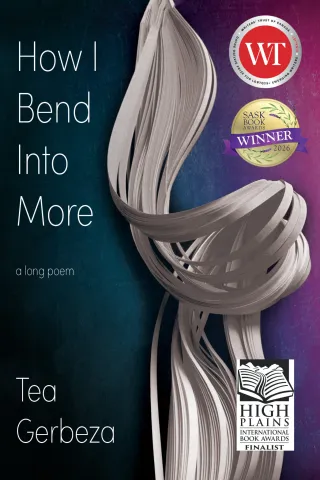
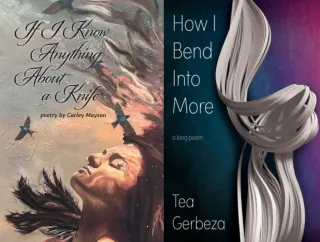
In alignment with my poem in the Summer Issue of The Fiddlehead, I recommend How I Bend into More by Tea Gerbeza. Her exploration of the changes in her body due to scoliosis and the experience of surgery were profound for me, the mother of a relatively nonverbal kid who could not express all that he has endured with his spine. We intuit so much. Thank you Tea.
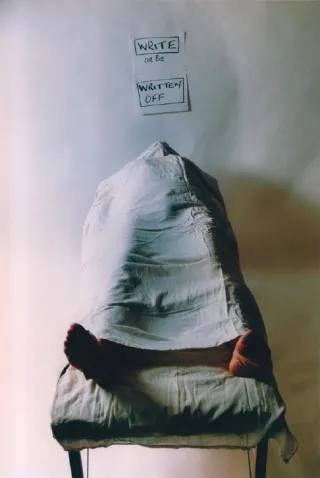
there's a photograph i read frequently — Write or be Written Off, 1988, from the British artist & activist Jo Spence (1934 -1992) \ it's a small portrait oriented photograph \ a vintage C-type print with muted colours
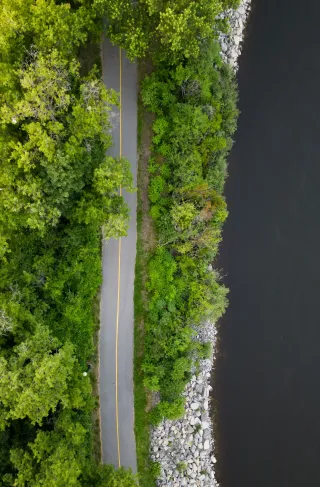
I live in a river valley. It has taken millennia for the long path of the Gatineau River to etch this valley out of the rocks and hills of the Canadian Shield. Vast, countless forests, fields, and wetlands border the river’s shoreline, bringing their boundless biodiversity.
I've been returning lately to …And They Have Escaped the Weight of Darkness by Ólafur Arnalds. It's an album I write to—not as background, but as a kind of formal pressure. The compositions move patiently, through repetition and small tonal shifts rather than dramatic change, and I'm drawn to work that trusts atmosphere over event, accumulation over arrival.
Patty Loveless has provided the soundtrack of my life. My highs and lows, my triumphs and heartache (I’ve been there before), my country roots, and my big dreams have all been reflected in her songs. How lucky I’ve been to listen along! And yet, until recently, I’d not paid as much attention to a key part of her oeuvre.
I brought Joanne White’s first novel, Bay Island Girl, on a recent vacation, expecting to dig my toes into the sand and let the breeze carry me through the pages. I don’t usually read the crime genre, but thought it would be a great vacation read. I wasn’t expecting an in-depth look into the psyche of a female police officer suffering from the same debilitating brain disease as I do, PTSD. Compassion is a driving force in this text.