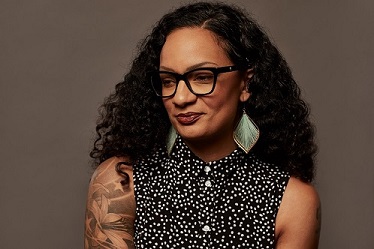
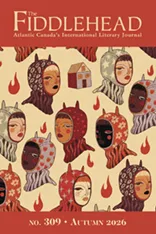
The Fiddlehead is excited to announce the finalists of our 2021 Creative Nonfiction Contest, judged by Chelene Knight! The winner of the $2000 contest prize will be announced on October 1 and the winning essay will appear in the Autumn 2021 issue (289). Thank you to all who entered and congratulations to the following fifteen finalists!
As we receieve submissions for the upcoming BIPOC Solidarities special issue, we'll be featuring our wonderful team of editors who are working to bring the issue together.
This special issue is meant as an opening, extending the invitation to BIPOC writers to transform the content and spirit of The Fiddlehead far beyond a single issue; this issue is a commitment to transformation and accountability.
The Fiddlehead's 2021 Creative Nonfiction contest is now open and we're excited to announce that Chelene Knight will be judging this year's submissions!
I was seven or eight years old when I learned the story of Akedat Yitzchak. It appears in Genesis 22, where God instructs Abraham to take his son Isaac up a mountain and make of him a burnt offering. Abraham complies, or seems to, binding Isaac to an alter and preparing to slit his throat. An angel materializes and tells Abraham, “Don’t do it! You passed the test. God knows that you believe in Him.” Then a ram appears, and Abraham releases Isaac, sacrifices the ram, and down the mountain go father and son.
In honour of Stuart McLean, who passed away on February 15, 2017, we present, from our archives, Fiddlehead editorial assistant Ryan Gaio's piece from November 2015.
As a queer, transgender Canadian I often find people like me to be either underrepresented or poorly represented in fiction. The idea that marginalized groups are underrepresented in all forms of artistic media (especially the most popular varieties) is hardly new, but even so, I always find it worthwhile to call attention to some of the great work happening by queer artists across the country whenever I get the chance. . . .
Jan Zwicky claims in her essay “The Ethics of the Negative Review” that a negative review is a “Squelching of self and creativity,” but for me my first semblance of a negative review was a grand inspirational moment, a first milestone to becoming a writer. Someone had taken my work to be worth criticizing on a higher level than mere feedback and deemed it to be worth spending the time to criticize. That was a great compliment. . . .
Taking a page out of the Globe and Mail’s column on “10 rules for writing” (who took a page out of the Guardian’s “Rules for writers” series, who took a page out of Elmore Leonard’s 10 Rules of Writing . . . I feel like I’m following the yellow-brick road . . . ), here are ten suggestions on submitting. Sending your prized brainchildren to far-off publications may seem daunting, so hopefully this list will ease some of that confusion and anxiety. . . .
While small presses and literary magazines are often used as stepping stones, they are more rightly to be considered cornerstones that all other stones ought to be set in reference to.