Whenever I listen to music, I’m searching for emotional devastation.
Before I hunker down to write, early in the morning, while the world is still dark, I will often go on long drives, blasting music that incites these feelings; those that break down my walls and allow me to reach a place of raw vulnerability. Particularly if I’m writing poetry.
As an avid reader, and because reading is such a personal thing, it’s difficult for me to recommend one book to people I’ve never met. But in keeping with the theme of my story, Children of the Gentle People, which centres around food and friendship during times of unease, I’d like to suggest one beloved book: Lolo Houbein’s One Magic Square.
Growing up with a family that’s half Cuban, I’ve always been drawn to literature that explores the Caribbean experience: the legacies of colonialism, the textures of island life, the complicated inheritance of culture and family. When How to Say Babylon appeared on my MFA reading list, I was eager to dive in. The memoir won the National Book Critics Circle Award in Autobiography and was named one of Barack Obama’s Favorite Books of 2023, but beyond the accolades, I wanted to engage with Caribbean voices as part of my own development as a writer.
I realize that, if the purpose of this column is to surface works its readers haven’t immediately heard of, picking the most recent Booker Prize winner misses the mark. That said, Paul Lynch’s Prophet Song is just that good. More critically, it’s an important artifact pointing up the exhaustion of the threadbare neoliberal consensus that dominates much of “developed” democracy.
When my friends recommend books, I borrow them from the library—my apartment remains infested with paperbacks despite my efforts to downsize, and books are an expensive vice—but I lasted a whole fifteen minutes into the audiobook of Julia Armfield’s novel Our Wives Under the Sea before I caved and ducked into a bookstore to buy it while out on a walk. It was just that good.
It is a joy for a non-scientist like me to lose myself in descriptions of the exquisitely designed life cycles of pecan trees, maple trees, wild strawberries, witch hazel, black ash, and cattails.
This is my year of reading short story collections, and this book exploded my understanding of what you could do with the “novel in short stories” form. The dust jacket describes it as a novel, and it follows a single protagonist, named Nina. But many of the stories that comprise it were published separately and several made it into collections like The Journey Prize anthology, and that’s because they make such powerful use of the condensed tension of the short story.
When I arrived at my designated campsite on my first camping trip, I encountered a black bear. It was bent over a picnic table two camp sites over, its snout riffling through crumbs and crusts on abandoned paper plates. My childhood friend, a bear expert who was working at Algonquin Park that summer, was shocked. She said she hadn’t seen bears roaming this close to the campsites all summer. She assured me that the likelihood of it coming back was slim, but I wasn’t convinced.
Nucleus, a poetry collection by Svetlana Ischenko, published by Ronsdale Press.
Nucleus takes readers through a journey that traverses space (Ukraine to Canada) and language (Ukrainian to English) to arrive at an arresting and beautiful synthesis.


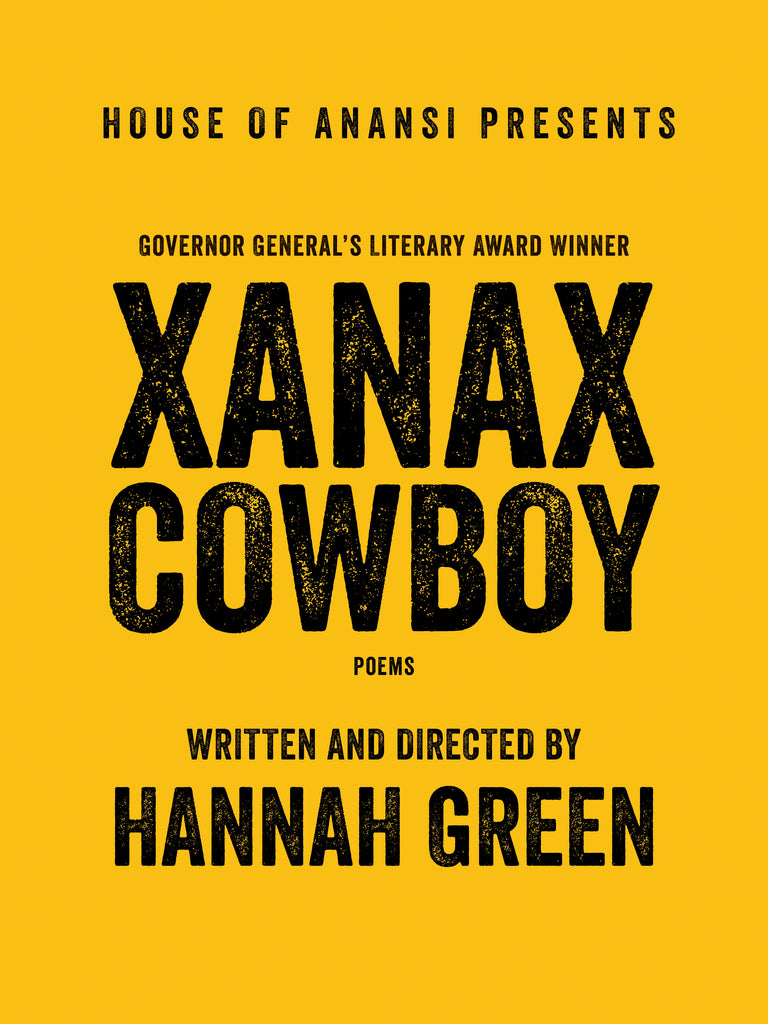 Hannah Green’s Xanax Cowboy is a long poem—a total of 128 pages—that interrogates