Growing up with a family that’s half Cuban, I’ve always been drawn to literature that explores the Caribbean experience: the legacies of colonialism, the textures of island life, the complicated inheritance of culture and family. When How to Say Babylon appeared on my MFA reading list, I was eager to dive in. The memoir won the National Book Critics Circle Award in Autobiography and was named one of Barack Obama’s Favorite Books of 2023, but beyond the accolades, I wanted to engage with Caribbean voices as part of my own development as a writer. What I found was a book that moved me in ways I hadn’t quite anticipated.
Sinclair was born and raised in Montego Bay, Jamaica, and the memoir chronicles her childhood in a strict Rastafarian household under the rule of her father, a former reggae musician whose religious convictions grew increasingly rigid and controlling. Her mother, though loyal to her father, gave her the one gift she knew would take Safiya beyond the stretch of beach and mountains their family called home: a world of books, knowledge, and education she conjured almost out of thin air. This gift—particularly the introduction to poetry—became Sinclair’s lifeline and eventual means of escape.
What struck me most about this memoir is how Sinclair embraces complexity. This is a deeply layered examination of how colonial history, religious resistance, and patriarchal control become tangled together in ways that are difficult to untangle. She has the self-possession to share the history of Rastafari and her relationship with the religion, contextualizing her father’s extremism within a larger framework of a people pushing back against generations of oppression, even as that resistance became its own form of confinement for her and her siblings.
The prose itself is extraordinary. Sinclair is first and foremost a poet, the author of the poetry collection Cannibal, winner of a Whiting Award and the OCM Bocas Prize for Caribbean Poetry, and that training shows on every page. There’s a lushness to her language that makes even the most difficult passages feel like something you want to linger inside. She writes about violence, isolation, and the systematic silencing of women in her household with a precision that cuts deep.
Sinclair credits her mother, a community educator who taught children across Jamaica, with instilling lessons about literature and media. The mother-daughter relationship is one of the memoir’s emotional centers—watching Sinclair observe her mother’s voiceless struggle under relentless domesticity while simultaneously recognizing that her mother was planting seeds of rebellion through education. It’s a portrait of generational resilience passed down through books and vocabulary lessons and stolen moments of encouragement.
Sinclair was advised to wait before writing this book, to work through the trauma first, and that patience shows. This is something considered—a reckoning that allows space for complexity, for the ways her father’s paranoia and control existed alongside genuine love and cultural pride. She delineates her father’s decline into paranoia and coercive control while peppering the book with tiny moments of rebellion, of strength gained from female relatives, of strength in siblinghood.
After finishing the book, I had the incredible opportunity to attend a virtual visit Sinclair made to our MFA program. She did a brief poetry reading, and it was amazing—hearing her voice brought an entirely new dimension to her work. The same lyrical composure that makes her prose so compelling translates into something almost incantatory when she reads her poetry aloud. It made me appreciate even more deeply how her identity as a poet shapes everything she writes.
Reading How to Say Babylon as someone exploring Caribbean literature through my own family lens, I found myself thinking about the threads that run through the region—how colonialism’s legacy shows up in Jamaica and Cuba in distinct ways, shaped by different histories, yet how certain questions persist across borders: how family can be both sanctuary and cage, how language and writing become tools for making sense of fractured histories. Sinclair’s experience is her own, rooted in the specificity of her Jamaican Rastafarian upbringing, but her journey from silence to voice speaks to something larger about what it means to claim your story. It’s a memoir I’ll be recommending to everyone I know who wants to understand what it means to inherit a complicated home and then build a new one through words.
— Selena Mercuri is a student at the University of Toronto. She was the recipient of the 2023 Norma Epstein Award, and she placed third in the 2024 Hart House Literary Contest. Selena is currently writing a novel set in both Canada and Cuba.
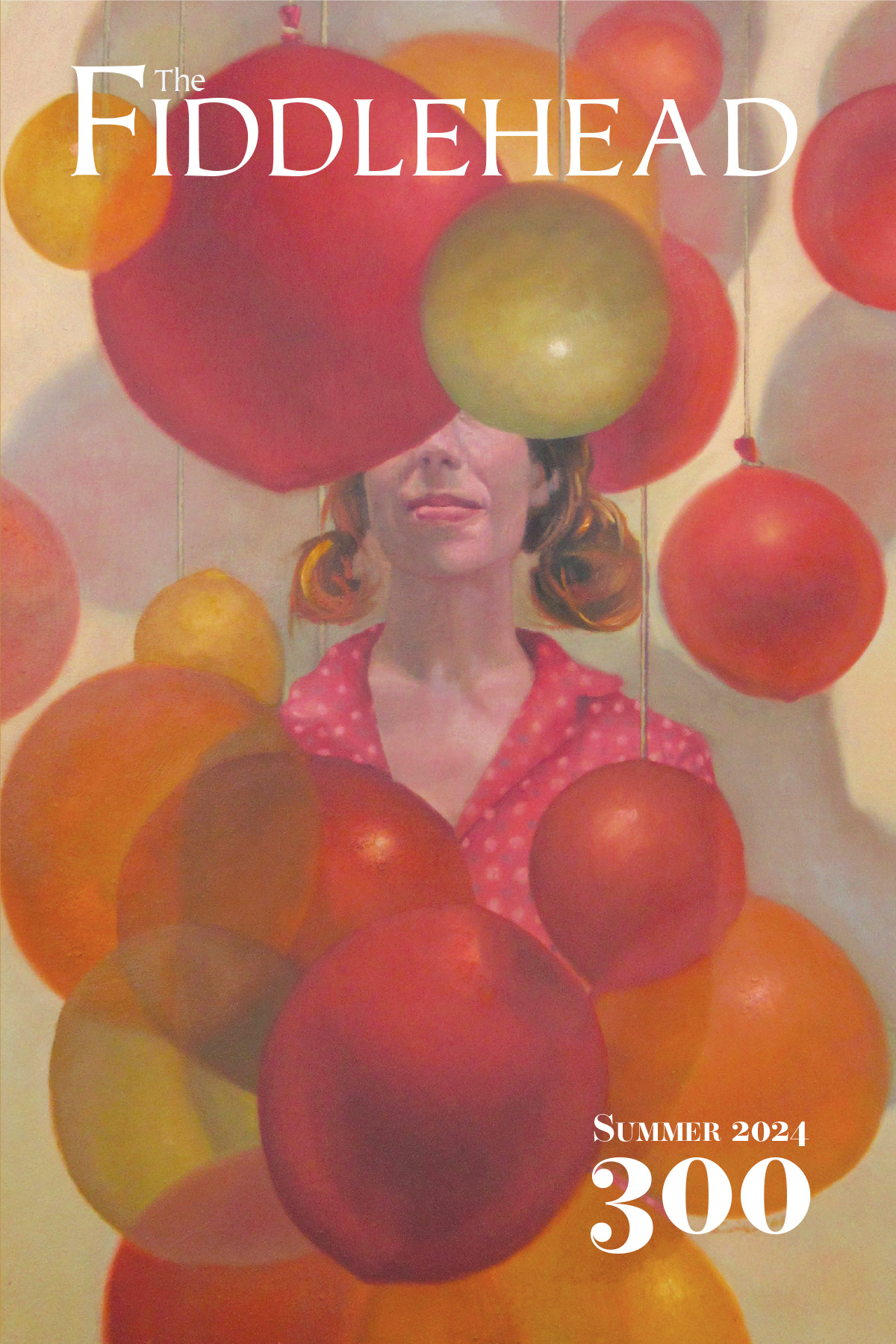
You can read Selena Mercuri' story in Issue 300 Summer Fiction 2024. Order the issue now:
Order Issue 300 - Summer Fiction 2024 (Canadian Addresses)
Order Issue 300 - Summer Fiction 2024 (International Addresses)